


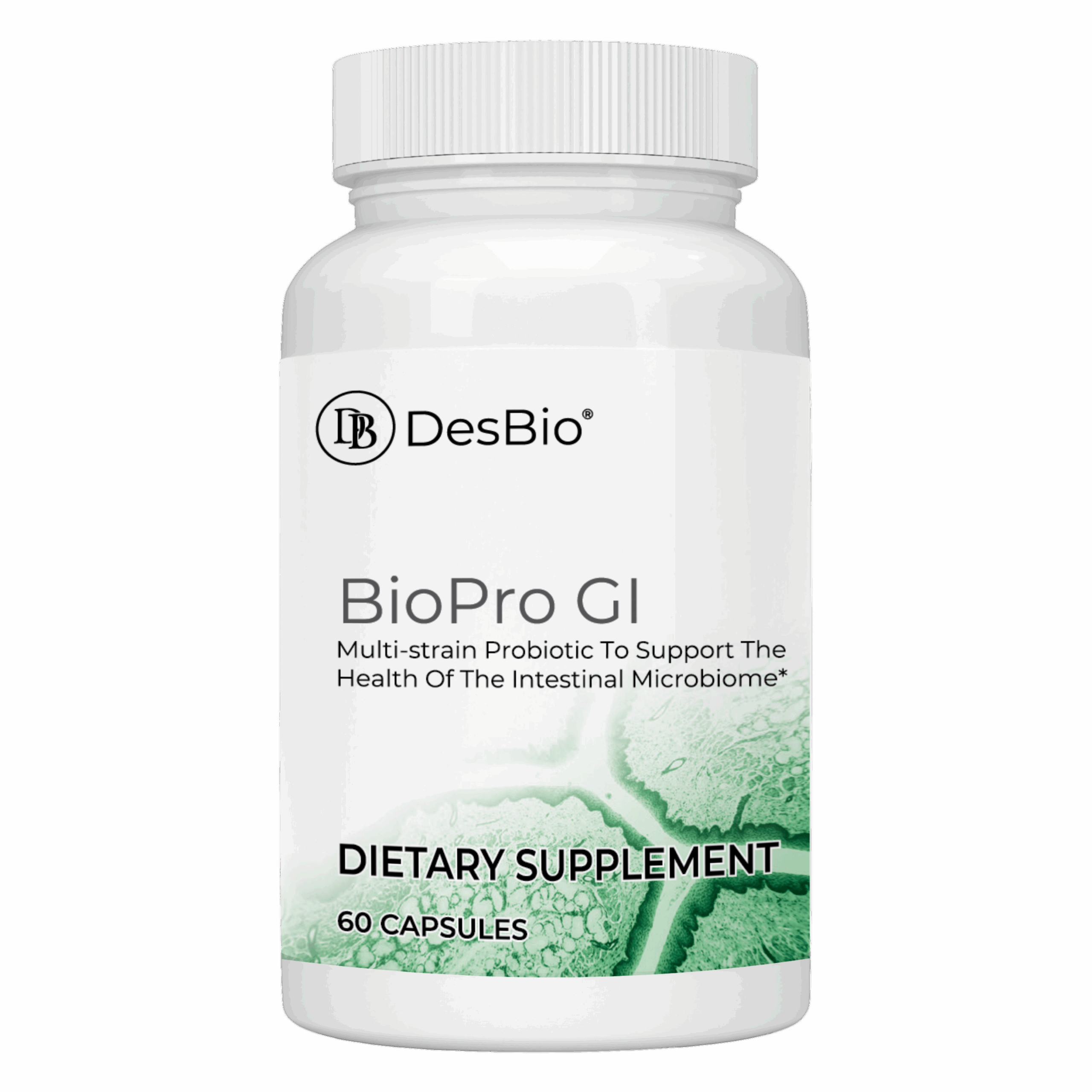
BioPro GI
$65.95
Description
BioPro GI provides five robust probiotic strains specifically selected to support the health of the intestinal microbiome for strengthened intestinal immunity and gut-barrier function. BioPro GI is the ideal formula for individuals looking for long-term support for restoring intestinal microflora balance and digestive health.
Why BioPro GI?
BioPro GI is the ideal formula for patients looking for long-term support for restoring intestinal microflora balance and optimizing the body’s defenses against pathogens, toxins, and sensitivities. BioPro GI provides five robust probiotic strains specifically selected to support the health of the intestinal microbiome for strengthened intestinal immunity and gut-barrier function. BioPro GI can help restore beneficial bacteria for optimal immune and digestive health, increase the absorption of nutrients while promoting weight management, and encourage daily relief from bloating and irregularity.
Restores Harmony after Dysbiosis
Dysbiosis refers to an imbalance or maladaptation of the microbiome of the intestinal tract. Microflora imbalance has been linked to a variety of health conditions including allergies, autoimmunity, food sensitivities, obesity, fatigue, and more. Poor diet, exposure to toxins and medications, stress, and other environmental factors can all lead to dysbiosis. These patients may also experience ongoing uncomfortable GI symptoms including diarrhea, constipation, and gas.
Helps Manage Multiple Food Intolerances
Majority of food intolerance symptoms are focused primarily on the gut but may also affect other organs of the body. Symptoms tend to be caused by an abnormal gut microbiota, which in turn mal-ferments food residues in the colon, producing symptoms such as belching, diarrhea, heartburn, indigestion, nausea, passing excessive amounts of gas, vomiting, and flatulence.
Vulvovaginal Candidiasis (VVC)
Vulvovaginal candidiasis (VVC) is a common infection affecting the female reproductive system and tissues associated with it. Studies have shown the effectiveness of lactobacilli, especially Lactobacillus acidophilus, Lactobacillus rhamnosus, and Lactobacillus fermentum, when administered colonizes the vagina with beneficial microbes and/or prevents the colonization and infection of the vagina by C. albicans. The probiotic strains have been shown to inhibit the growth of Candida albicans and possibly prevent recurrences of VVC.1
Promotes Lower Hemoglobin A1C and Blood Glucose
High levels of hemoglobin A1C and blood glucose can lead to serious health conditions such as type 2 diabetes mellitus. A study suggests diabetic patients who consumed probiotic fermented milk (kefir) containing L. acidophilus and Bifidobacterium decreased the HbA1C and fasting blood glucose in comparison with patients who consumed conventional fermented milk.2
Supports Healthy Joints
The intestines often become inflamed in patients with arthritis, which results in increased intestinal permeability. This allows for their lining to permit toxins, germs, and waste into the bloodstream and triggers an inflammatory response and causes joint pain.3 Studies have shown that probiotic strains lactobacillus and L. bifidum can help reduce biomarkers that may lead to inflammation and cause joint pain. A pilot study found that patients experienced less symptoms and inflammation of rheumatoid arthritis when they took a daily dose of the probiotic Lactobacillus rhamnosus compared with a group that took a placebo.4
Promotes Weight Management
Antibiotics can destroy helpful bacteria in the gut, leading to dysbiosis. Dysbiosis is microbial imbalance in the gut caused by overgrowth of harmful bacteria, yeast, and/or parasites. As a result, harmful bacteria can multiply and create twice the number of calories as healthy bacteria, aiding in weight gain and causing serious health issues. Probiotic strains such as L. rhamnosus, L. gasseri and B. lactis have been shown to help balance the microorganisms in the gut and help with weight management.5
Minimizes Colonization of Yeast
There are a number of predisposing factors that can colonize yeast. These include antibiotics, steroid treatment, and a high sugar diet. In conditions of a healthy immune system, this yeast organism does not usually cause any problems. When the colonization of yeast organisms becomes excessive in the internal mucous membranes, it can lead to health issues. BioPro GI contains beneficial bacteria and yeast that functions internally to promote a healthy immune system and digestion. The unique blend of probiotic strains are specifically formulated to ensure that the beneficial bacteria are able to survive the acidic environment of the stomach, colonize the intestines, and strengthen the GI tract’s vital mucosal lining to help promote healthy immune system.
Gastrointestinal Conditions
Sedentary lifestyles, diet, stress, food intolerance, medications, or a simple change in routine can trigger acute gastrointestinal conditions. Gastrointestinal conditions are the most common problems affecting the GI tract.6
L Acidophilus is used as a probiotic in supporting immune defenses, intestinal health, as well as possibly supporting healthy blood lipid levels.7 This bacterium has been the focus of multiple studies surrounding intestinal probiotic therapy. L. acidophilus colonizes most densely in the small intestine, where it helps maintain the integrity of the intestinal wall, ensures proper nutrient absorption, helps ease occasional digestive discomfort and supports healthy overall digestive function. Studies have found that the L. acidophilus probiotic strain helps modulate the response of antibiotics and may help boost immune system activity as well as support vaginal health.8
B Bifidum is among the first beneficial probiotic strains to colonize in the intestines of newborns and continue throughout life. This probiotic strain helps promote bacterial balance, prevent the growth of unwanted bacteria, mold, and yeast by naturally adhering to the intestinal mucosa. It also assists in the breakdown of complex carbohydrates, fat, and proteins during digestion and produces enzymes that break the larger molecules down into smaller components.9
L Rhamnosus is one of the most well-studied probiotics. Intestinal implantation of L. rhamnosus has been shown to be beneficial in reducing symptoms associated with food allergies, poor gastrointestinal motility, and inflammatory gastrointestinal diseases.10 This probiotic strain is known for its ability to survive passage through the GI tract and is thought to help improve vaginal and urinary health and decrease vaginal irritation. A review of research on probiotics found people traveling out of the country to developing countries had a 3.9 percent rate of diarrhea when taking probiotic strain L. rhamosus compared to a 7.4 percent rate for those not taking a probiotic.11
B Lactis is a beneficial bacterium that has many valuable nutritional components. This bacterium is most commonly found in the intestines and its job is to break down body waste and aid in the absorption of various vitamins and minerals. B. Lactis promotes healthy digestion and helps fight off some of the damage caused by harmful bacteria found in the body. 12
1 Falagas ME, Betsi GI, Athanasiou S. Probiotics for prevention of recurrent vulvovaginal candidiasis: a review. Journal of Antimicrobial Chemotherapy. 2006 Aug;58(2):266-72.
2 Ostadrahimi A, Taghizadeh A, Mobasseri M, Farrin N, Payahoo L, Beyramalipoor Gheshlaghi Z, Vahedjabbari M. Effect of probiotic fermented milk (kefir) on glycemic control and lipid profile in type 2 diabetic patients: a randomized double-blind placebo-controlled clinical trial. Iranian Journal of Public Health. 2015 Feb;44(2):228-37.
3 Medina M, De Palma G, Ribes-Koninckx C, Calabuig M, Sanz Y. Bifidobacterium strains suppress in vitro the pro-inflammatory milieu triggered by the large intestinal microbiota of coeliac patients. Journal of Inflammation. 2008 Nov 3;5:19.
4 Hatakka K, Martio J, Korpela M, Herranen M, Poussa T, Laasanen T, Saxelin M, Vapaatalo H, Moilanen E, Korpela R. Effects of probiotic therapy on the activity and activation of mild rheumatoid arthritis–a pilot study. Scandinavian Journal of Rheumatology. 2003;32(4):211-5.
5 Mekkes MC, Weenen TC, Brummer RJ, Claassen E. The development of probiotic treatment in obesity: a review. Beneficial Microbes. 2014 Mar;5(1):19-28.
6 Kelesidis T, Pothoulakis C. Efficacy and safety of the probiotic Saccharomyces boulardii for the prevention and therapy of gastrointestinal disorders. Therapeutic Advances in Gastroenterology. 2012 Mar;5(2):111-25.
7 Lactobacillus acidophilus. (n.d.). umm.edu
8 Burton JP, Cadieux P, Reid G. Improved understanding of the bacterial vaginal microflora of women before and after probiotic instillation. Applied Environmental Microbiology. 2003 Jan;69(1):97-101.
9 Wei X, Wang S, Zhao X, Wang X, Li H, Lin W, Lu J, Zhurina D, Li B, Riedel CU, Sun Y, Yuan J. Proteomic Profiling of Bifidobacterium bifidum S17 Cultivated Under In Vitro Conditions. Frontiers in Microbiology. 2016 Feb 12;7:97.
10 Näse L, Hatakka K, Savilahti E, Saxelin M, Pönkä A, Poussa T, Korpela R, Meurman JH. Effect of long-term consumption of a probiotic bacterium, Lactobacillus rhamnosus GG, in milk on dental caries and caries risk in children. Caries Research. 2001 Nov-Dec;35(6):412-20.
11 Teitelbaum JE. Probiotics and the treatment of infectious diarrhea. Pediatric Infectious Disease Journal. 2005 Mar;24(3):267-8.
12 Eskesen D, Jespersen L, Michelsen B, Whorwell PJ, Müller-Lissner S, Morberg CM. Effect of the probiotic strain Bifidobacterium animalis subsp. lactis, BB-12®, on defecation frequency in healthy subjects with low defecation frequency and abdominal discomfort: a randomised, double-blind, placebo-controlled, parallel-group trial. British Journal of Nutrition. 2015 Nov 28;114(10):1638-46.
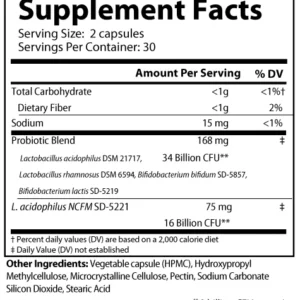
Ingredients
- Sodium (15 mg)
- L. acidophilus (16 Billion CFU)
- Probiotic Blend (34 Billion CFU)
Dosage
As a dietary supplement, take 2 capsules per day (dose may be divided) away from food (at bedtime is ideal) or as directed by your healthcare provider.





Reviews
There are no reviews yet.